


Russian FM Highlights His Country’s Commercial Ties With India Despite US Tariffs
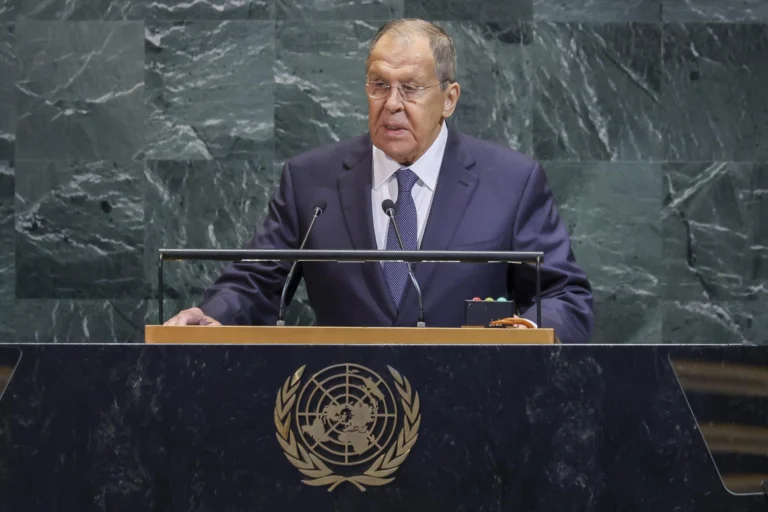
Minister of Foreign Affairs of the Russian Federation Sergey Lavrov speaks during the General Debate of the 80th session of the United Nations General Assembly at United Nations headquarters in New York, New York, USA, 27 September 2025. Photo: EFE/EPA/SARAH YENESEL
September 27, 2025 Hour: 3:40 pm
Russian Foreign Minister Sergei Lavrov assured this Saturday that economic cooperation between Russia and India is not in danger despite the high tariffs imposed by the United States on Indian products.
RELATED:
Russia Launches Preparatory Phase for Personalized Melanoma Vaccine Trials
“You asked me if economic cooperation between Russia and India can be saved, but it is not in danger, there is not the slightest doubt about it,” Lavrov told an Indian journalist during a press conference in New York at the end of his speech at the UN.
For Lavrov, the Indian authorities have made it very clear that Delhi is free to choose its partners. The Russian minister stated that India can listen to US proposals on bilateral relations, but will not do so if it concerns Delhi’s contacts with third countries.
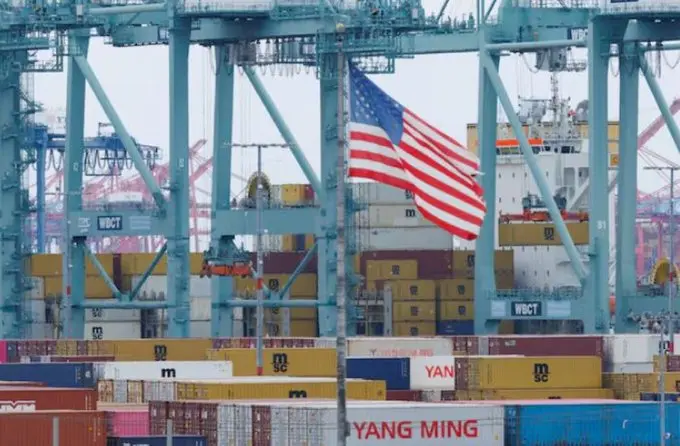
In August, the Donald Trump administration imposed tariffs of 50% on Indian products as punishment for India’s purchase of Russian oil.
Since the beginning of the war in Ukraine, New Delhi has maintained a balanced position, avoiding condemning Moscow and significantly increasing its imports of Russian crude oil.
This position has earned him criticism from Washington, and Trump himself accused India and China at the UN of “financing Russia.”
“India’s energy imports are aimed at ensuring a predictable and affordable energy cost for the Indian consumer and India will continue to take all necessary measures to safeguard its national interests and its economic security,” Indian Foreign Minister Randhir Jaiswal reiterated this Friday.
This December, Russian President Vladimir Putin will visit India to continue strengthening ties between the two countries, Lavrov confirmed today.
Economic cooperation between Russia and India has strengthened significantly in recent years, and will continue to do so in 2025 despite US sanctions and tariffs.
This strategic bilateral relationship not only remains stable, but is also experiencing solid growth in trade and investment, reflecting the willingness of both countries to consolidate their economic and political alliance in the face of external pressures.
In fiscal year 2025, bilateral trade between Russia and India reached a record $68.7 billion, an increase of six times compared to pre-war levels in Ukraine. In the first quarter of 2025, bilateral trade exceeded $17.5 billion, with Russian exports to India valued at $16.3 billion and Indian exports to Russia at $1.2 billion, reflecting a trade balance favourable to Russia, is one of India’s leading energy suppliers.
This trade expansion has been supported by the diversification of trade beyond traditional energy resources, incorporating sectors such as agricultural products, pharmaceuticals and computer technologies.
In addition, there is a steady growth in mutual investment and joint ventures. In April 2025, the two governments agreed on six new strategic investment projects, showing a joint commitment to further boost their economic partnership.
A critical point in this relationship has been the massive purchase of Russian oil by India, which now accounts for 35-40% of its total crude imports. This energy strategy allows India to ensure predictable and affordable energy costs for its consumers, while strengthening its economic security, giving it autonomy from Western pressures.
This has led the US to impose 50 per cent tariffs on certain Indian products in retaliation for these purchases, but the Indian and Russian authorities have insisted that these measures do not compromise bilateral economic cooperation.
Russian Foreign Minister Sergey Lavrov has reiterated that economic cooperation is not at risk despite US tariffs. India has full freedom to choose its partners without outside interference. Indeed, the bilateral agenda foresees new summits and high-level visits, such as the visit of Russian President Vladimir Putin to India in December 2025 to further strengthen these ties.
In conclusion, economic cooperation between Russia and India remains a strategic pillar for both countries, driven by a common interest in economic sovereignty and trade diversification, with solid growth prospects despite protectionist and punitive pressures from the United States. This alliance is a clear example of how two great powers can find ways to prosper each other in a complex and dynamic geopolitical context.